The Hour That Changes Everything
The Hour That Changes Everything
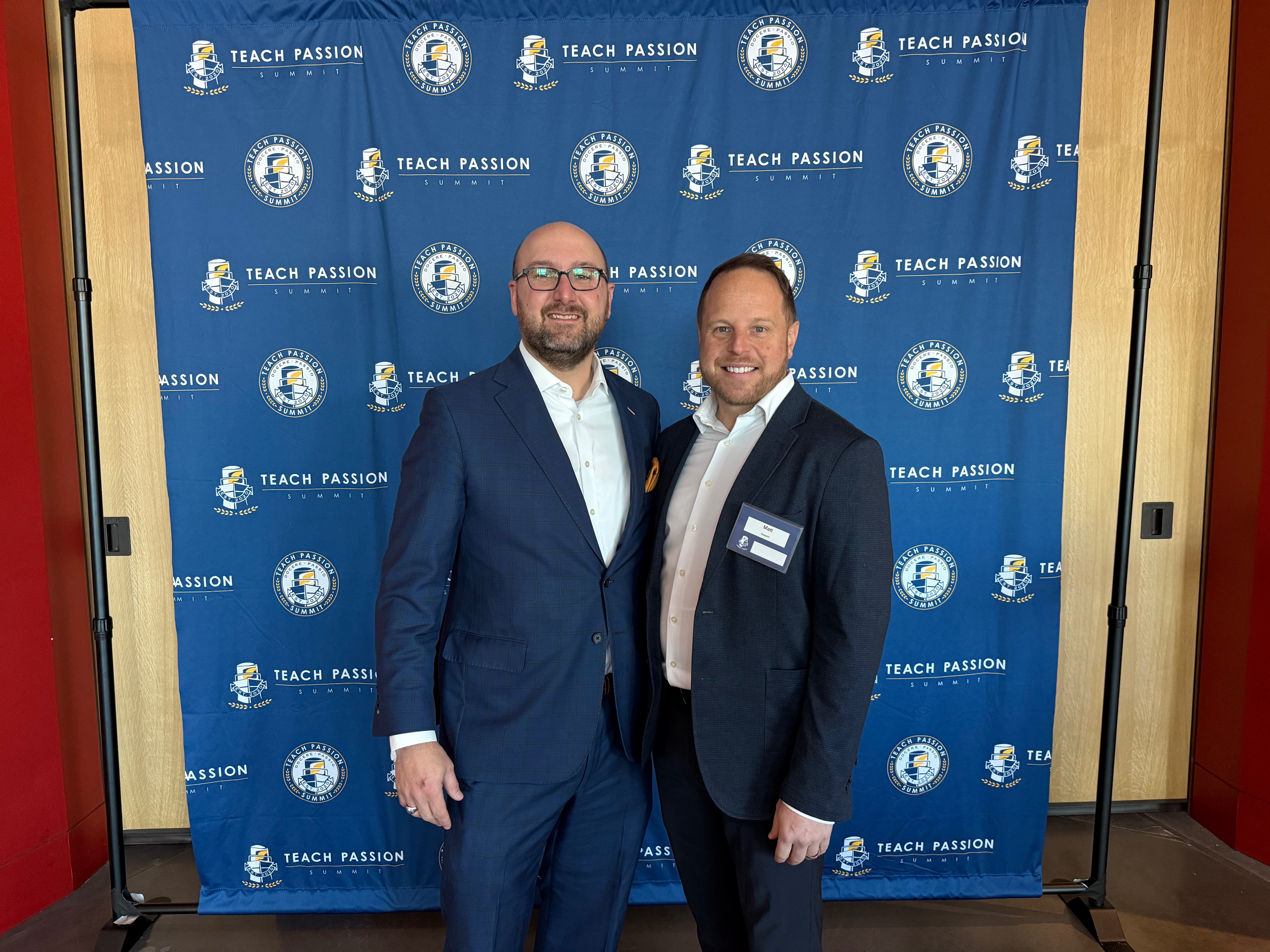
I was asked a question recently that I cannot get out of my head. It came from a conversation in my C12 group with Matt Geppert. I have not been able to shake it for a single day since.
When Matt took over as the President of Southeast Asia Prayer Center (SEAPC), he did what any strong leader would do. He built a strategic plan. Part of the plan was to travel to every country where SEAPC had an office and sit down with the leader of that office face to face. He crafted four questions to ask in every one of those conversations. They were designed to find out if SEAPC was serving those leaders well and if those leaders were still aligned with the mission. He spent a lot of time on those four questions. He brought the plan to the board for review and approval, and they thought it was a good plan.
Before implementing it, Matt ran the plan past his father, Mark Geppert, who had faithfully served as SEAPC President for over twenty years prior to transitioning leadership to him, for one last review.
Mark heard the plan, looked at the four questions, and without hesitation told his son to throw them out. Four questions Matt had carefully crafted. Four questions the board had already approved. Mark said get rid of all of them and ask only one.
Really just one? How could just one question determine if the leaders of the SEAPC field offices were the right fit for their role and that SEAPC was serving them well?
The one question,
Do you spend 1 hour in prayer daily?
That was it.
If they do that, his father said, everything else will take care of itself.
I have been wrestling with Matt's question ever since. This one simple question is so profound. I have been thinking about it every day since I left that boardroom. At first it seems like a simple question, but the more I sit with it, the more I see how much weight is packed inside it. The more I process, the more I realize how deep the wisdom was that Mark was handing his son. On the surface it is just a question. In reality it is a lifetime of walking with God distilled into one sentence.
What first struck me was how simple the question was. There is no jargon. There is no leadership theory. There is no buzzword. Just one sentence, plainly stated. And the simplicity is the genius. The best leaders I know take complicated things and make them painfully simple. If you want people to follow you, you have to make the path simple and clear. The paradox is that simple is not easy. Simple is what is left after you have done the hard work of stripping away everything that is not essential. Mark Twain said it best.
I would have written a shorter letter if I had more time.
Mark Geppert clearly had the time. Twenty years of leading SEAPC. Decades of his own prayer life. He had been refining that one question for most of his ministry without realizing it. By the time Matt brought him a four-question plan, Mark had already done the hard work of getting to the one.
What hit me next was how direct the question is. There is nowhere for the answer to hide. SEAPC exists, in their own words, to change the world through prayer and action. That is the essence of their calling. They are a global Christian community that believes lives and nations are changed through prayer. Mark founded the ministry in 1991 after God told him,
go where I show you and pray, and as you pray, I will respond from heaven.
That sentence is still the engine of the whole organization. So how can you lead a SEAPC office and not have an active prayer life? If you actually believe what SEAPC believes, that prayer is how nations are changed and how doors are opened, then how can you not prioritize the very thing the entire mission is built on? The hour of prayer is not a side discipline at SEAPC. It is the work itself. To not pray for an hour a day while leading a SEAPC office is functionally to disagree with the mission you are leading.
This single honest answer tells you almost everything else you need to know about a leader. It exposes what they actually believe, not what they said in their interview. It exposes their values, because where they spend their first hour of the day is where their values actually sit. It exposes their priorities, because nobody finds an hour for something they do not value. It exposes whether they have truly bought into the vision or whether they are just renting it for a season. You do not need a separate vision audit. You do not need to ask if they live the core values. You do not need a behavioral interview rubric. The answer to one honest question gives you all of it.
This has had me chewing on what the Beratung version of that question would be. What is the one unifying, clear, painfully simple question I could ask any team member that, if they could not answer it honestly, would tell me they are not a fit? I have wrestled with several. Do you have a set of core values you use to make decisions? Are you FOR Pittsburgh? They are close but not yet stripped down to the essence. And the more I sit with it, the more I suspect the reason it is hard to find the one question is that I have not yet spent enough time at the source to have it distilled in me. Simple is rarely easy. We will come back to where the kind of clarity Mark had actually comes from.
What is striking to me is how rarely any of us ask any question this simply. We measure KPIs, check strategic alignment, and audit processes. We rarely ask whether the people driving the mission are actually connected to the source of the mission. And this question is bigger than alignment anyway. One hour in prayer does more than test a culture. One hour anchors a life. It connects you to God in a way that the snippets most of us are running on cannot. A quick prayer before bed. A grace before a meal. A breath in the car between meetings. Those are good, and God hears them. But they are not the same as showing up and giving God a full hour of your day. The hour does what the fragments cannot. It makes Him the priority of your day instead of the afterthought. And when you have just spent an hour with the Father, it becomes very hard to turn around and commit the kind of sin that would betray that time. The hour shapes everything else you do because everything else is now downstream of it.
Another thing this question quietly exposes is what a leader is actually prioritizing. An hour does not appear in a calendar by accident. An hour costs something. To carve out an hour for God means you have to look honestly at what you are already spending an hour on every day. Most of us are already giving an hour a day to something. We just have not labeled it. The scroll. The show. The news cycle. The articles we tell ourselves we have to read to stay sharp. The busy work that feels like productivity but produces nothing that matters. The hour-of-prayer question is also a where-is-your-hour-already-going question. And the answer to that second one, if we are honest, is the more uncomfortable one. Mark was not only asking SEAPC partners about their prayer life. Without saying it, he was asking them what they were currently choosing over God.
All of this has had me looking hard in the mirror. I value my prayer life. I have always thought of it as one of the more robust disciplines I have built. But do I actually spend an hour? Some days yes. Most days, I am at thirty minutes. Sitting with Matt's story, I cannot stop asking myself how I stretch to that hour. What do I cut? Social media is an easy first answer. Reading articles is another. It seems hard until you look at how we spend our time. The honest question is not what I would cut, but what I am currently prioritizing above God without realizing it. That list is longer than I want to admit.
That kind of self-reflection on my own prayer life is exactly what Mark was making Matt do. He was not just handing his son a new question to add to a strategic plan. He was making Matt look in the mirror first. When Mark told him to throw out the four questions and ask only one, he was doing what every great leader eventually does. He was teaching his son how to lead without telling him how to lead. He was so wise. He knew that if Matt was going to require every partner around the world to spend an hour in prayer, how could he not do the same? Up until that conversation, Matt had not prioritized an hour of prayer in his own life.
That day, the habit began. Matt has faithfully committed at least 1 hour of prayer daily.
And notice the chain. Mark taught Matt. Matt told our C12 group. Now I am writing this to you. This is how the hour actually moves. One leader at a time, through example, not announcement.
Another thing this question keeps reflecting back to me is how a leader actually prays with their people. If you spend an hour with God every day, and prayer is genuinely the priority you say it is, then it has to spill into how you lead. As I look at Beratung and TeachPassion, we have a rich prayer life inside the company. We gather every Tuesday for intercessory prayer as a team, and it is one of the most formative rhythms on our calendar. Every week I pick five clients to lift up daily in prayer. I send each of them a letter letting them know they are being prayed for and inviting them to share back any specific petitions they would like me to pray over. I pray over our team every day and often share some of those prayers back with them. We do prayer walks around our offices and before major events. We open every leadership meeting in prayer. We put every major decision into prayer first. Those are all real rhythms and they matter.
The reality, though, is that I am not as consistent outside the appointed times. It is easy to pause and pray when the calendar tells me to. The harder question is what happens between the appointments. I am not consistent in praying with Amanda. I am not consistent in praying as a family. The one place I am genuinely consistent is with Abby, and watching her learn to bring real things to God at her age has changed me more than almost anything else I do in a week. If the Tuesday rhythm proves we can build a prayer culture inside a business, then I have no excuse for not building the same rhythm with Amanda or around our dinner table. It is not a capacity problem. It is a priority problem. And priorities are not something you announce. Priorities are something the people around you catch you living out.
When you actually prioritize an hour of prayer every day, the hour does not stay confined to the hour. It seeps into every other part of your life. The middle of the workday. The drive between meetings. The dinner conversation. The way you respond to bad news. That is exactly what Mark understood when he handed his son the one question. He was not just naming a discipline. He was handing Matt the anchor habit that would shape every other rhythm of his life.
This is what James Clear would call a keystone habit, but elevated. It is not just a habit that cascades into other habits. It is a non-negotiable. Habits can be broken without much consequence beyond the habit itself. Non-negotiables cannot be broken without the whole structure starting to crack. And the act of practicing a non-negotiable in front of others teaches them what to prioritize better than any sermon you could preach to them. Your calendar preaches louder than your words.
The same question that exposes what we prioritize also exposes what we are leaving behind. Especially what we are leaving our children. As Tim Tebow often says, an Inheritance is something you give to someone. Legacy is what you leave in them.
Most leaders I know are focused on inheritance. They are building wealth to pass to their children. I work with them every day in my financial planning practice, so I am not knocking the instinct. But here is the math that should stop all of us cold. Within three generations, the average family wealth in America is completely gone. And if you think your estate plan is somehow going to beat that curve, let me ask you this. Do you really believe you are going to leave your children more than Solomon left his? The wisest, wealthiest king in the history of Israel, who wrote Proverbs, who built the temple, who ruled a kingdom at peace, could not keep his own sons from ruin. Solomon's wealth did not save his line. It fractured it. The kingdom split the generation after he died and never fully recovered.
So what do we actually leave our children?
We leave them core values they have learned through observation. More is caught than taught. Your children are not sitting in the back of the car memorizing your principles. They are watching your calendar, your phone, your tone with their mother, and whether or not you bow your head before you eat. They will not remember most of what you said. They will remember almost all of what you did. Prioritizing this hour shapes their lives more than any inheritance ever could.
A few months ago I got a small reminder of how this actually works. A friend came into our office to record a podcast in our studio. He saw the window to my office was open and stepped in.
He thought I was sleeping. I told him no, I was praying, and I turned and showed him the prayer list sitting open on my desk in front of me.
He paused. In the middle of the day? Yes. In the middle of the day. I had been caught in the act. What really got me was that a few weeks before that, Abby had caught me doing the same thing. Daddy, what are you doing? I'm praying, sweetheart. The little hinge in both of those moments, the hinge I keep coming back to, is this. I was caught. And it was something I actually wanted to be caught doing. As parents and as leaders, we have to exemplify what we want others to imitate, and the unguarded middle of an ordinary workday is exactly where that exemplifying either happens or it does not. When was the last time someone caught you in the act of doing something? And was it something you actually wanted to be caught doing?
The harder truth underneath the obvious one is this. The best thing you can leave your children is not your money. It is a functioning, surrendered faith that lets God be the one who provides for them. If it all comes from God, and you live with an open palm, God can take and give without destroying you or your family. If it all comes from you, and your children learn to look to your bank account instead of to the Father, then the second the account shifts, their world shifts with it. You will have built their foundation on something God never intended to hold that much weight.
The question that has been haunting me since Matt's talk is this. If your children learned, from watching you, to pray for one hour a day, would most of what you are worried about for them even matter?
If you are anything like me, and like the leaders I have asked, the real answer is no.
That answer should be a relief. In my head, it is doing the opposite. It is making me terrified of getting this wrong with Abby. I cannot afford to not prioritize this for her. The chance to give her a father who actually prays for an hour a day, the way Mark gave Matt that same chance, is not something I want to fumble. But the second I start thinking that way, my brain drops into the gap. The gap between thirty minutes and an hour. The gap between who I am right now and who I feel called to be. Instead of measuring the gain, the distance between who I was a year ago and who I am today in Christ, I stare at the distance between today and the goal and feel dejected. The hour starts to feel too hard. Too impossible. Instead of stretching from thirty to thirty-five minutes tomorrow morning, I look at sixty and want to quit before I start.
The same C12 conversation that opened with Mark's question wrestled with exactly this tension. So we asked it openly. Where in our lives is failure truly not an option, and where are we just importing the phrase from places it does not belong? We worked our way to Apollo 13, and the famous Gene Kranz line from the Ron Howard film.
Failure is not an option.
We talked about how often leaders take that line and stamp it on their marriages, their parenting, and their businesses. We wear it like a badge. But I am not sure it belongs everywhere we apply it.
Failure is not an option should be situational. A pastor during COVID with employees relying on him and a family to provide for may have to operate under that banner for a season. A flight director with three astronauts running out of oxygen absolutely has to. As a leader shared in our meeting, driving up a gravel path to the top of Pikes Peak in an ill-equipped sedan has to. But in leadership at large, mistakes and failures are a gift. They are the curriculum. The Gospel itself is built on failure and redemption. A leader who refuses to allow for failure is a leader who has quietly stopped believing in grace. Failure is not an option, applied wrongly, will push us to implement the wrong things for the wrong reasons. It will tell you to quit at thirty-five because you are not at sixty yet.
There is only one place where failure truly is not an option. Obedience to the Gospel.
Faith in Jesus is the one thing we cannot afford to fail at, and the beautiful irony is that it is also the one thing we cannot fail at, because He wipes away every other failure we bring to Him. The law tells us failure is not an option and crushes us under the weight of it. The Gospel tells us Jesus already handled the option we could not.
This brings me right back to what Mark was actually telling his son. The failure is not the lack of the hour. The failure is not making prayer the priority in the first place. The hour is not the engine. The hour is the evidence. James says faith without works is dead, and most of us read that backwards. The works do not produce the faith. True faith yields the works. The same is true with the hour. Faith without a robust prayer life is dead, but the prayer does not produce the faith. The faith leads to the prayer. That is what Mark was actually saying to Matt. Obedience to the Gospel is the place where failure is not an option, and a praying life is what that obedience looks like in motion.
As I have been reflecting on all of this for weeks now, something else has been turning over in my head. The one-hour concept did not actually start with Mark Geppert. It did not start with SEAPC. It started in Scripture. In the garden of Gethsemane, the night Jesus was about to be betrayed, He turned to His disciples who were failing to stay awake with Him and asked,
Could you not watch with me one hour?
That moment in Mark 14 is the seed of everything we have been talking about. The practical idea of pulling that verse out of the garden and turning it into a daily discipline came from Mark Geppert's good friend and longtime board member of SEAPC, Dick Eastman.
Several days after our C12 conversation, Dick Eastman was called home after more than fifty years of faithful service to God. He passed away on April 21 at the age of eighty-one. The week I was sitting in the SEAPC boardroom in their house of prayer hearing Matt retell the story his father had handed him, Dick was stepping into the presence of the God he had spent five decades talking to for at least an hour a day. You do not script moments like that. I cannot look at this as coincidence. The man who carried the torch of that one hour handed it off, quietly, right as the rest of us were being reminded that it still burns.
Dick spent his life mobilizing the global Church to pray. He led Every Home for Christ into 215 nations and trained over two million believers through the Change the World School of Prayer. He wrote The Hour That Changes the World, the small book Mark first read decades ago that shaped his ministry and eventually shaped Matt's. The legacy Dick left most of us was smaller and more personal than any of his organizational numbers. It was the stubborn conviction that if a believer would give God one hour a day, everything downstream of that hour would change.
Mark Geppert took that conviction and ran with it for a lifetime of ministry, eventually writing his own book on what a praying believer actually looks like in motion, Attack Lambs: The Prayer That Changes the World. I have read Mark and Dick's books several times over the years, and I think every believer should read them both. I have included them both in the Beratung Book Canon. These two books together are maybe the most important pair on prayer a Christian leader can own.
Dick's method is simple. He took the question Jesus asked the disciples in Gethsemane and broke that hour into twelve five-minute movements. Praise. Waiting. Confession. Praying the Word. Watching. Intercession. Petition. Thanksgiving. Singing. Meditation. Listening. Praise again. Twelve doors into the same hour. Most of us struggle with an hour of prayer because we run out of words after about eleven minutes. Dick showed us we are not supposed to fill the hour with our words. We are supposed to let God fill it with His presence, and the twelve movements give us the handrails to stay in the room.
The chain I mentioned earlier stretches further back than I first revealed. Before Mark ever taught Matt, Dick taught Mark. Before Dick, Scripture itself was the original teacher. The full chain reads from the Gospel of Mark, to Dick Eastman, to Mark Geppert, to Matt Geppert, to our C12 boardroom, to you.
This is also where Mark's wisdom came from. Earlier I told you I have been wrestling to find the Beratung version of Mark's one question, and I admitted the reason I have not landed on it is that I have not yet spent enough time at the source. Mark did. He did not arrive at his question through a leadership offsite or a strategy book. He arrived at it because he had spent decades, hour by hour, sitting with God, soaked in the same Gospel that asked the question of him first. The question was the residue of all those hours. You cannot manufacture that kind of clarity. You can only pray your way into it.
When I lay all of this out, the threads turn out to be one strand pulled in different directions. One hour of prayer. One obedience that cannot be negotiated away. One inheritance of observable faith that outlasts every dollar we leave behind. The hour is the practice. The obedience is the posture. The legacy is what the hour and the obedience leave in the people watching us. You cannot sustain the obedience without the hour, and you cannot leave a faith legacy without an obedience your children can see.
The question I am sitting with this week is the same question Mark gave Matt. The same question I want to leave with every leader reading this. Are you devoting one hour of prayer with God daily?
Here is what I have come to believe. If the Christian leaders in this city all committed to one hour of prayer with God daily, Pittsburgh would become more famous for God than steel. Not because we ran another program. Not because we hosted another summit. But because we finally went to the source.
I am exploring this with you. I am still stretching from thirty toward sixty, like every leader trying to do this honestly. None of us have arrived. But I am convinced this is where it begins.
One question. One hour. One priority.
Gloria Deo.


